

Jotun industrial protective coatings FAQ: application and parameters
China-based distributor of Jotun industrial protective coatings — supplied from the China production base to projects worldwide.
Keyword index: select a term to jump to the matching question on this page
Application and parameters
What surface preparation grade should steel reach? How much difference between Sa2.5, St3 and St2?
The difference is significant and directly affects coating service life.Blasting to Sa2.5 (near-white) is the normal requirement for heavy-duty systems; Sa3 is stricter and is often specified for inorganic zinc silicate and immersed areas; Hand and power tool cleaning reaches only St3 or St2 and removes mill scale and salts poorly; it suits low-corrosion environments or local repair and should not be used under inorganic zinc primers. Surface preparation is the main factor in corrosion performance; later coats cannot make up for a deficient preparation step.
How is dry film thickness (DFT) determined? What happens if the film is too thin or too thick?
Film thickness is set by the corrosivity category and the design life, with upper and lower limits: for typical steel structures a single coat is 60 to 80 µm, and total system thickness is about 160 to 200 µm in C3, 240 to 320 µm in C4, and higher in C5 and offshore environments.Excess thickness risks cracking, retained solvent and reduced intercoat adhesion; Insufficient film thickness leads to early rusting. Accept the film on site using a thickness gauge under the 80/20 or 90/10 rule.
How are spreading rate and quantity calculated?
Theoretical spreading rate (m² per litre) = volume solids (%) × 10 ÷ dry film thickness (µm).For example, at 80% volume solids and a target dry film of 100 µm, the theoretical spreading rate is 8 m² per litre; Then add the loss for the application method (higher for spray, lower for roller) to obtain the actual quantity to order. Give us the area and target film thickness and we can provide a quantity list per model.
How is the recoat interval determined? What if the maximum interval is exceeded?
Recoat intervals depend on the model and the temperature, and can differ several-fold for the same product: a typical epoxy may need tens of hours at 0 °C but only a few hours at 23 °C.Beyond the maximum allowed interval the coating has fully cured: it must then be abraded or sweep blasted to provide a key, otherwise intercoat adhesion is insufficient and intercoat peeling can occur.
How long is the pot life of a two-component coating after mixing? What if too much has been mixed?
Pot life depends on formulation and temperature and shortens markedly in summer heat (sometimes to 1–2 hours).Use within the pot life after mixing; If it thickens or heats up, do not add thinner and continue using it. Surplus paint must not be returned to the original pail. Mixing in batches for the shift's use is safer than one large mix.
Does thinner need to be added? How is the addition rate controlled?
Thinning is needed, but only with the companion thinner and within the upper limit given in the product data sheet (most models stay within 5% to 10% by volume). Over-thinning lowers film thickness, affects curing and intercoat adhesion and causes sagging. Thinners from different systems must not be mixed: using a polyurethane thinner in an epoxy system, for example, directly affects film formation.
Can coating be scheduled in rain or damp weather?
Start with two numbers: the substrate temperature and the dew point.Standard practice is a substrate temperature at least 3 °C above dew point and relative humidity below 85% (solvent-free and special models follow their own data sheets); The lower the temperature, the longer the curing time. In winter use low-temperature products and provide insulation; do not start work in rain, snow or while the surface is condensing.(Solvent-free and special models follow their own data sheets.) In low temperatures curing times lengthen several-fold.In winter use low-temperature products and provide insulation; Do not apply in rain or while the surface is condensing.
What commonly causes sagging, pinholes, blistering and early rusting?
Sagging usually comes from too thick a coat or over-thinning. Pinholes are common with thick fast-drying products (solvent cannot escape) or high substrate temperature. Blistering is usually related to moisture in the substrate, residual salts and solvent between coats. Early rusting usually comes from inadequate preparation, insufficient thickness or too little zinc dust. Treatment is to remove back to sound coating and redo to the procedure; defective surfaces must not simply be overcoated.
Are fire protection and anticorrosive coatings the same class of product?
They are different.Fire protection coatings are designed to a fire resistance period (for example intumescent coatings for steel) and slow the temperature rise of steel in a fire; Anticorrosive coatings solve the problem of steel corrosion. The two can be used together, but selection criteria and acceptance standards differ completely and they are not interchangeable.
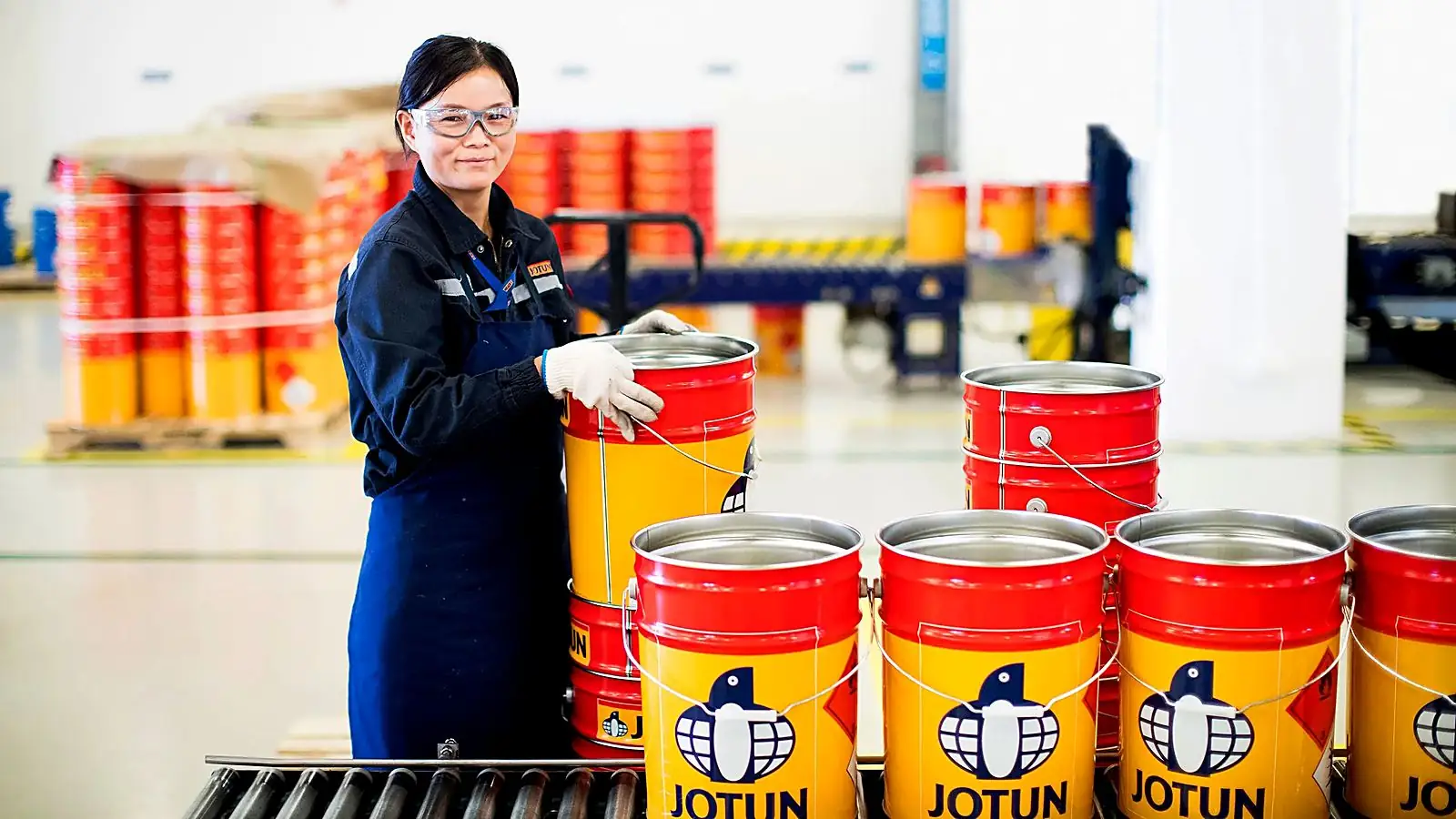
Application parameters are a limit, not a suggestion
Surface preparation grade, ambient temperature and humidity, recoat interval and pot life — deviating from any one of them affects final film thickness and adhesion.
Sales and technical support
Contact us for full support
We supply and export Jotun industrial coatings made in China. Get in touch.
- WhatsApp Start a chat
- Email max@rich-tech.net